
Stop Copying Setups You Don’t Need
If you are building your streaming setup, you will eventually face the question: should you use a webcam or invest in a DSLR camera?
Many streamers assume that a DSLR automatically means professional quality. Social media reinforces this idea with cinematic backgrounds, smooth background blur and perfectly lit creators. It creates the impression that serious streamers must use “real cameras.”
That assumption is often wrong.
A better camera does not automatically create better content. More importantly, it does not automatically create a better stream. The right choice depends on your content style, your layout, your goals and your overall setup — not on what someone else is using.
Let’s separate hype from reality and determine which camera actually fits your streaming setup.
Webcam vs DSLR – The Differences That Actually Matter
The fundamental difference between a webcam and a DSLR (or mirrorless camera) lies in sensor size, lens flexibility and creative control.
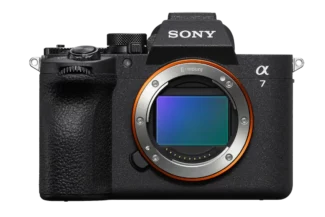
A DSLR uses a significantly larger sensor and interchangeable lenses. This allows for natural background separation, stronger low-light performance and full manual control over exposure, depth of field and framing. If your goal is a cinematic look with strong visual branding, this matters.
A webcam, by contrast, uses a smaller built-in sensor and a fixed lens. It keeps more of the background in focus and relies heavily on internal image processing. However, modern premium webcams have improved dramatically in sharpness and color reproduction. For most gaming streams, the visual difference is smaller than people expect.
The real distinction is not just image quality — it is complexity.
A DSLR setup requires clean HDMI output, a capture card, continuous power and proper lighting to perform well. A webcam connects via USB and works immediately.
If your priority is efficiency and stability, a webcam is often the smarter solution. If your priority is maximum creative control and visual branding, a DSLR offers more flexibility — but also demands more effort.
Types of Webcams for Streaming
Webcams have evolved significantly over the past decade. What once were simple office tools are now purpose-built creator devices.
Standard 1080p USB webcams remain the foundation of most gaming streaming setups. They are reliable, affordable and capable of delivering clean, professional results when combined with good lighting.
The Logitech C920 deserves special mention. For years, it was the undisputed king of streaming webcams and shaped the early era of Twitch content creation. It became the default recommendation for beginners worldwide. Today, it is technically outdated compared to modern optics and sensor technology. Newer webcams offer sharper detail, better dynamic range and improved low-light handling. Still, the C920 played a defining role in streaming history and remains usable for basic setups.
4K webcams are increasingly marketed as essential upgrades. In reality, they are often unnecessary for standard gaming content. Streaming platforms compress heavily, and most gaming creators display their webcam feed relatively small in the corner of the screen. In that scenario, anything beyond 1080p rarely provides visible improvement for viewers.
For gameplay-focused streams, a strong 1080p webcam with proper lighting remains the most logical and efficient choice.
een them.
Best Webcam for Streaming – Clear Recommendation
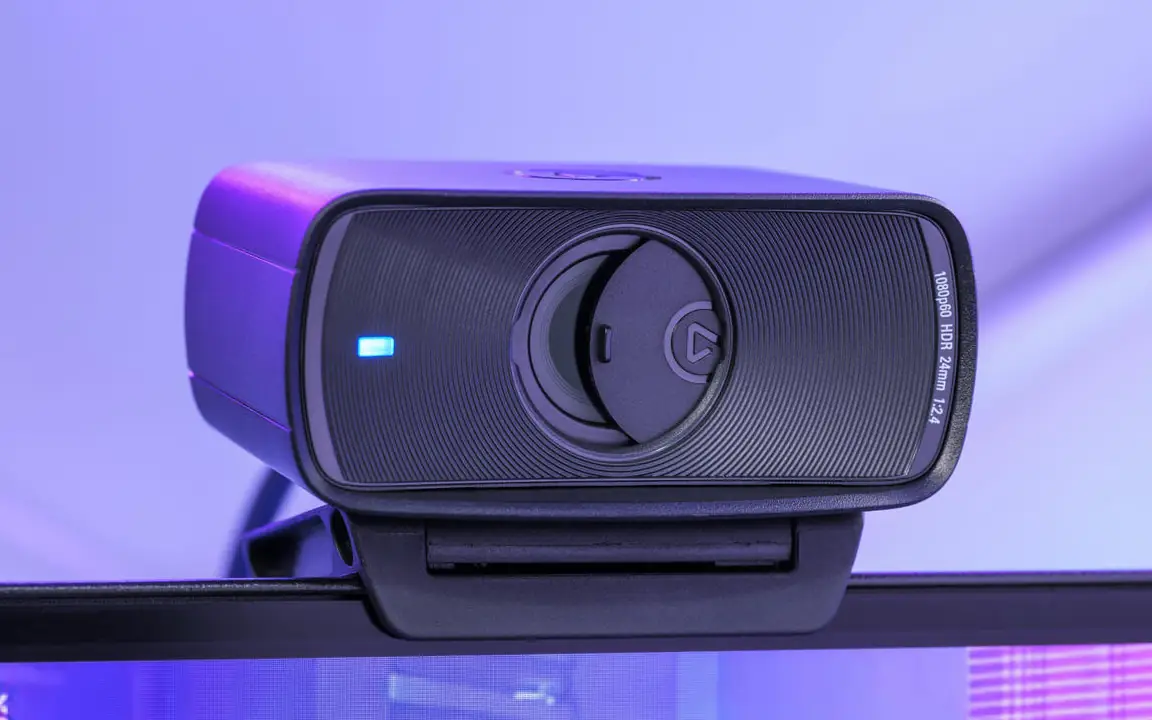
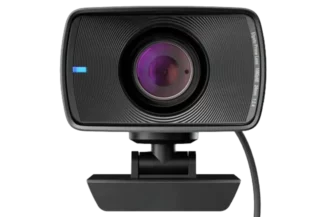
If there is one webcam that consistently stands out in the streaming market, it is the Elgato Facecam (MK.1 or MK.2).
The reason is not marketing — it is optics.
The Facecam features a large, high-quality lens paired with strong sensor tuning designed specifically for creators. Compared to many webcams in its category, it delivers noticeably sharper image clarity and more natural color reproduction. The larger lens design also makes it more forgiving under less-than-perfect lighting conditions. While no camera can compensate for poor lighting entirely, the Facecam handles minor exposure inconsistencies better than most competitors.
This balance of image quality, reliability and creator-focused design makes it one of the most well-rounded USB webcams available today.
For the majority of gaming streamers, this level of quality is already more than sufficient.
SB capture card is more than sufficient.
What You Really Need for a DSLR Streaming Setup
A DSLR or mirrorless streaming setup is not just “a better camera.” It is a production system.
First, the camera must support clean HDMI output. Without it, focus boxes and interface overlays will appear in your stream. You will also need a capture card to transfer the HDMI signal into your PC, which adds both cost and complexity.
Power management is critical. Streaming sessions often last several hours. A dummy battery or continuous power adapter is necessary to prevent interruptions.
Lens choice defines your visual style. For desk setups, a wide-angle lens is typically required. A fast aperture helps create strong background separation. Quality lenses, however, significantly increase overall cost.
And then there is lighting.
Without controlled lighting, a DSLR loses most of its advantage. Poor lighting results in harsh shadows, inconsistent exposure and image noise. In such cases, the practical difference between a DSLR and a high-end webcam becomes much smaller than expected.
A DSLR setup can look exceptional — but only when executed properly.

Lighting Is More Important Than the Camera
Lighting determines perceived quality more than sensor size.
Even the most expensive camera cannot fix flat, uneven or underexposed lighting. Meanwhile, a properly lit scene can make a premium webcam look highly professional.
A soft key light positioned slightly above eye level creates structure and depth. Diffused lighting reduces harsh shadows and improves skin tone naturally.
Reliable solutions like the Elgato Key Light provide adjustable brightness and color temperature in a clean desk-mounted format. They integrate well into streaming setups and offer consistent, controlled results.
More budget-friendly alternatives such as dual-light sets from Neewer can also deliver excellent quality. With two light sources, you can create balanced front illumination and subtle fill lighting for improved depth. While they may require slightly more space, they offer strong value for creators building a home studio environment.
Before upgrading from a webcam to a DSLR, upgrading your lighting will almost always produce a more noticeable improvement.
Who Should Choose a Webcam?
A webcam is ideal for beginners, practical streamers and most gaming-focused creators.
If your webcam feed is positioned small in the corner of the screen — which is standard for gameplay content — viewers will not benefit from cinematic depth or ultra-high resolution. In these cases, investing in a DSLR does not translate into meaningful viewer impact.
For single PC streaming setups where stability and simplicity are priorities, a premium 1080p webcam combined with good lighting is the most efficient solution.
It is reliable, easy to manage and fully capable of delivering professional results for gaming content.
The Real Problem: Wrong Expectations
The capture card myth exists because marketing often blurs the line between “capture” and “encoding.”
Many beginners search for terms like:
-
“Does a capture card reduce CPU usage?”
-
“Do I need a capture card for streaming?”
-
“Best capture card for single PC streaming?”
The honest answer is simple:
A capture card is a signal bridge — not a performance upgrade.
If your stream is lagging in a single PC setup, upgrading your CPU or GPU will help. Buying a capture card will not.
Who Should Invest in a DSLR or Mirrorless Camera?
A DSLR or mirrorless camera makes sense when the person is the primary focus of the content.
If your face is consistently large on screen — for example in Just Chatting streams, reaction content, educational streams or personality-driven formats — then the benefits of a larger sensor become significantly more visible. In those cases, depth of field, background separation and refined image quality directly enhance perceived production value.
For standard gaming creators where the webcam is small and secondary to gameplay, a DSLR is typically unnecessary. The difference in image quality simply becomes invisible in the final compressed stream.
A DSLR is a branding tool for personality-focused creators. It is not a requirement for gameplay-driven streaming.
Final Verdict – Choose Based on Goals, Not Hype
If you want simplicity, efficiency and strong value for money, choose a high-quality 1080p webcam and invest in proper lighting.
If you want maximum creative control and your content puts your personality at the center of attention, a DSLR or mirrorless setup can elevate your visual identity — provided you are ready for the added complexity and cost.
The right streaming camera is not about copying popular creators. It is about building a setup that aligns with your content style, technical comfort and long-term goals.
Professional streaming starts with understanding — not overspending.